
Battery Systems

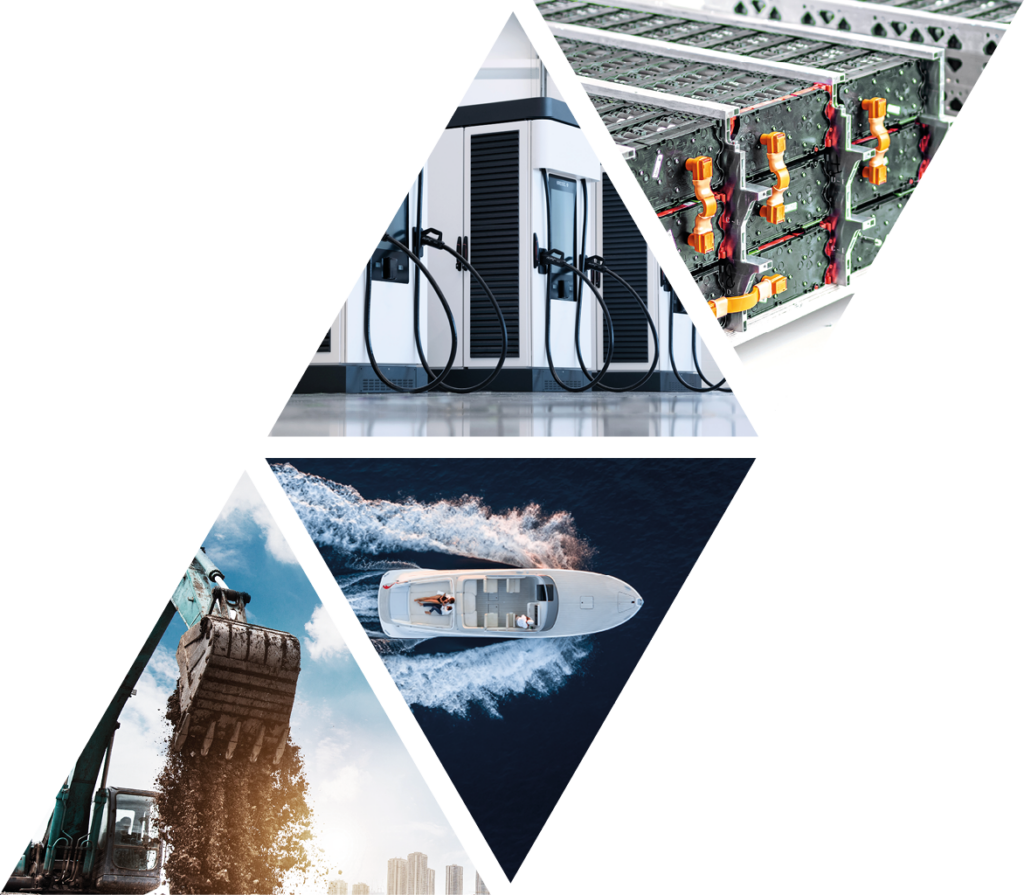
High voltage solutions for off-highway and marine applications

Contact us

Patented immersion cooling

Very energy-efficient cooling type, enabling a low temperature spread of <1° throughout the module, resulting in great battery lifetime and workday performance.

Minimizing a thermal runaway

Intensively tested safety features stand for a very low risk of fire propagation or battery fires. Thermal runaway tests are performed in-house, always showing great results.

Energy density

KREISEL Electric battery systems feature the highest volumetric and gravimetric energy density achievable in compliance with our advanced safety parameters.
Mechanical stability

KREISEL battery systems are resistant to vibrations and mechanical shocks with high acceleration forces.

KREISEL BATTERY SYSTEMS

Technical data

Energy Content (total)
63 kWh
Cell Technology
Li-Ion 21700
Operating Voltage (min/max)
306 V / 407 V
Dimension (L x W x H)
1111 x 795 x 351 mm
Weight
393 kg

Compliant to industry regulations
DNV certification
Open datasheet

KBP63

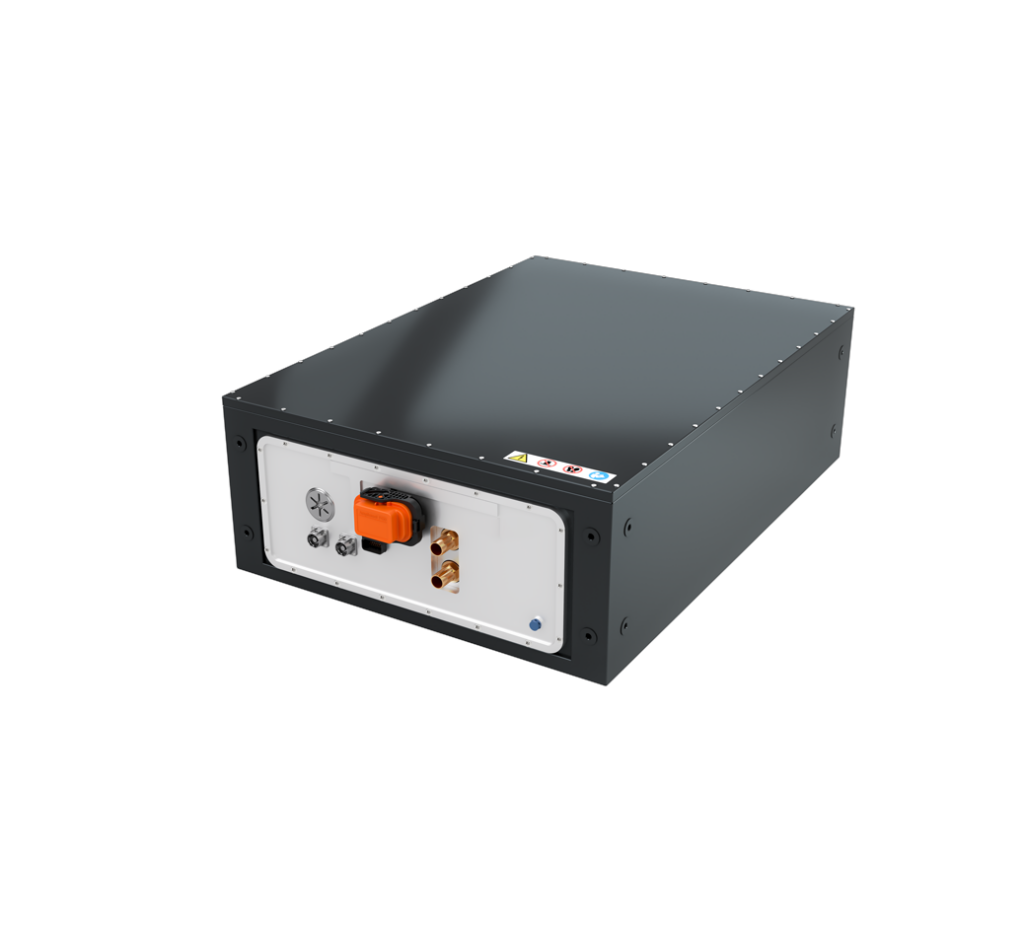
The KBP63 KREISEL battery system incorporates all KREISEL technology benefits in one product. A burst proof and sturdy design, paired with IP67 certification, provide an overall solution for countless applications. The 400V battery system can be connected in series and parallel, up to 16 packs and 800V applications. Any installation position is tested and certified.

Preliminary data
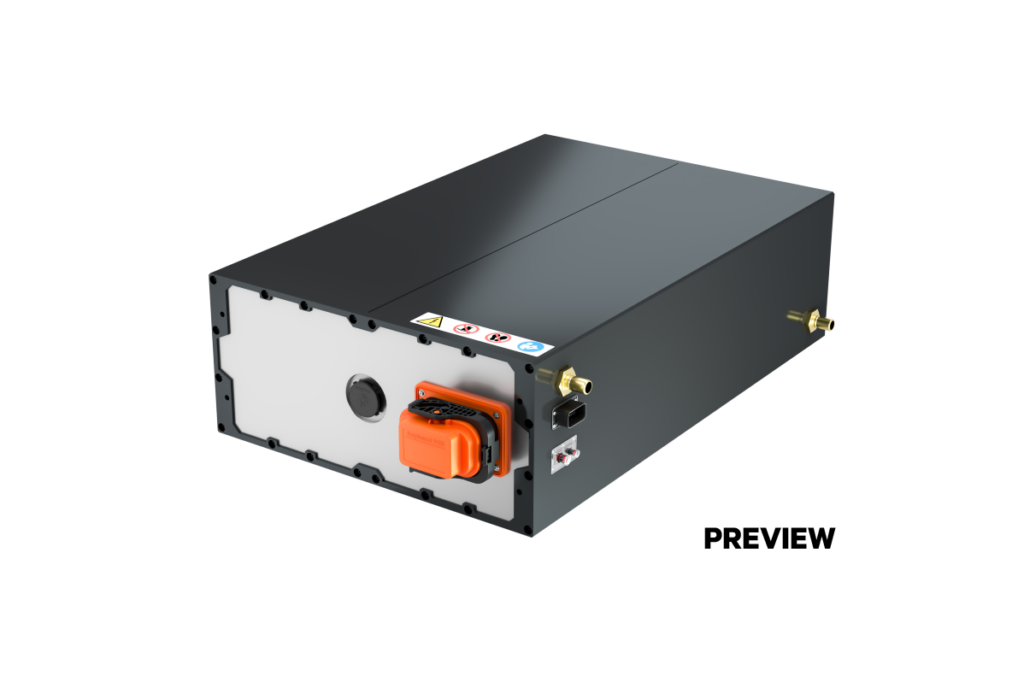
Energy Content (total)
24 kWh
Cell Technology
Li-Ion 21700
Operating Voltage (min/max)
335 V / 446 V
Dimension (L x W x H)
885 x 509 x 225 mm
Weight
160 kg
Peak Discharge (10sec.)
92 kW
Continuous Charge
16 kW

Datasheet Batteries Line Up

KBE24.450S

The compact battery system

Designed for high voltage applications with limited space.

Preliminary data

Energy Content (total)
39 kWh
Cell Technology
Li-Ion 21700
Operating Voltage (min/max)
558 V / 743 V
Dimension (L x W x H)
1356 x 509 x 225 mm
Weight
238 kg
Peak Discharge (10sec.)
154 kW
Continuous Charge
26 kW

Datasheet Batteries Line Up

KBE39.750S

The flexible battery system

The long version of the KBE39.750S system is designed for high voltage applications in many different use cases.

Preliminary data

Energy Content (total)
39 kWh
Cell Technology
Li-Ion 21700
Operating Voltage (min/max)
558 V / 743 V
Dimension (L x W x H)
790 x 509 x 450 mm
Weight
253 kg
Peak Discharge (10sec.)
154 kW
Continuous Charge
26 kW

Datasheet Batteries Line Up

KBE39.750C

The flexible battery system

The cubic version of the KBE39.750 system is designed for high voltage applications in many different use cases.

Preliminary data
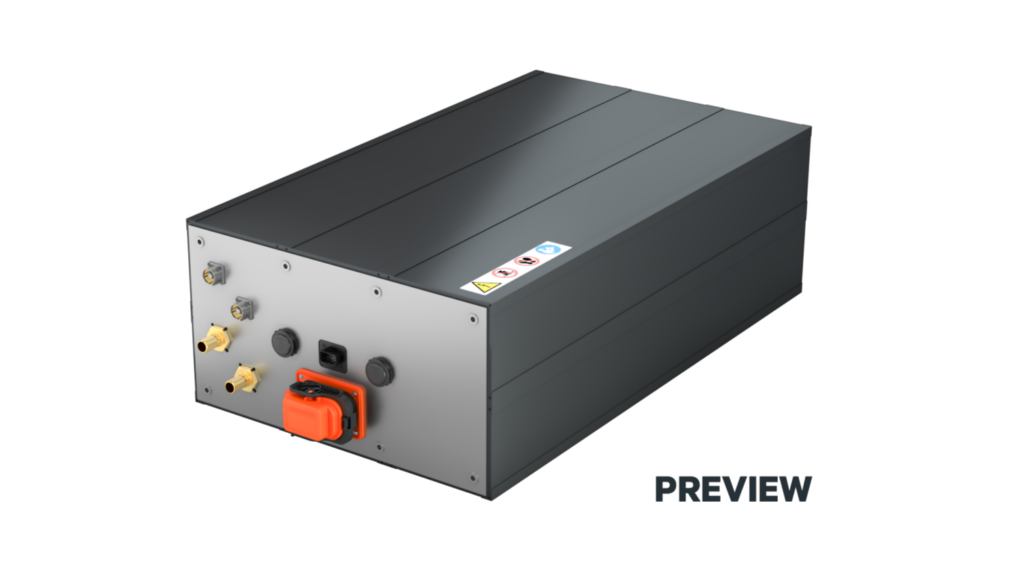
Energy Content (total)
59 kWh
Cell Technology
Li-Ion 21700
Operating Voltage (min/max)
558 V / 740 V
Dimension (L x W x H)
1076 x 666 x 348 mm
Weight
345 kg
Peak Discharge (10sec.)
231 kW
Continuous Charge
40 kW

Datasheet Batteries Line Up

KBE59.750M

All data is preliminary. 

Preliminary data

Energy Content (total)
60 kWh
Cell Technology
Li-Ion 21700
Operating Voltage (min/max)
285 V / 378 V
Dimension (L x W x H)
1076 x 666 x 348 mm
Weight
361 kg
Peak Discharge (10sec.)
234 kW
Continuous Charge
41 kW

Datasheet Batteries Line Up

KBE60.400M

All data is preliminary. 

KREISEL BATTERY SYSTEMS IN ACTION

“The integration of KREISEL Electric’s battery technology into the fully-electric road paver highlights the growing importance of low‑emission solutions in road construction.”

Fully-electric paver

“The combination of a powerful electric drive and KREISEL Electric’s battery technology makes the new tandem rollers a pioneering solution for sustainable road construction.”

Electric tandem roller

“Working with KREISEL Electric battery technology has enabled us to optimize the overall energy supply and ensuring safety and performance in our innovative P-12 hydro foil ferry.”

Gustav Hasselskog
CEO Candela
P-12 hydro foil ferry

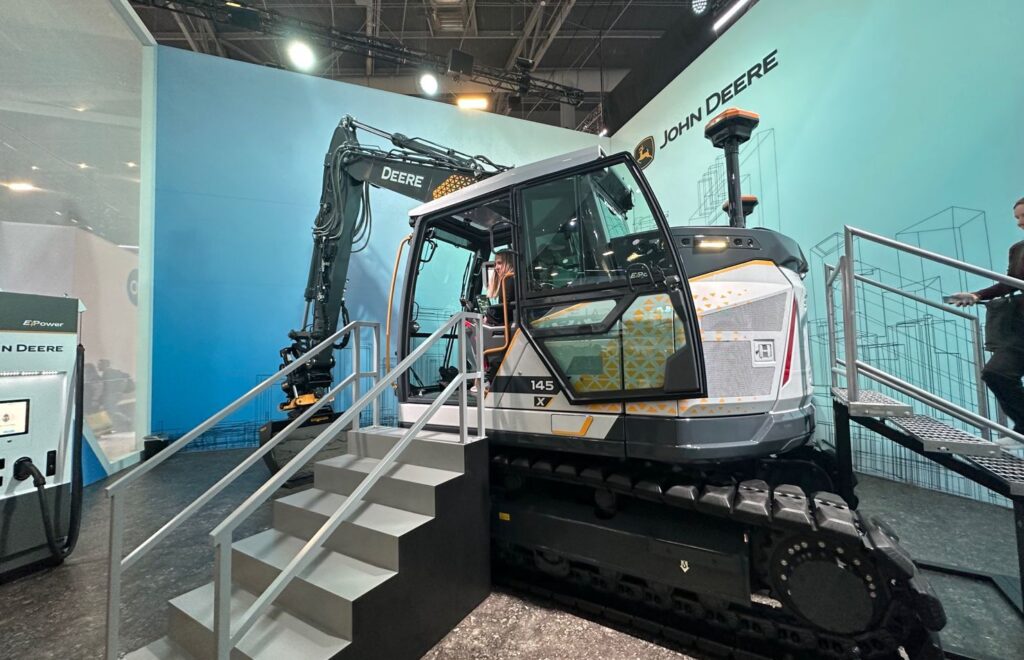
“With KREISEL Electric, we developed our first all-electric excavator, setting new benchmarks for the off-highway industry. The excavator prototype is just the beginning of the off-highway electrification portfolio.”

Grant Van Tine
Product Manager Electric Vehicles
John Deere Construction & Forestry
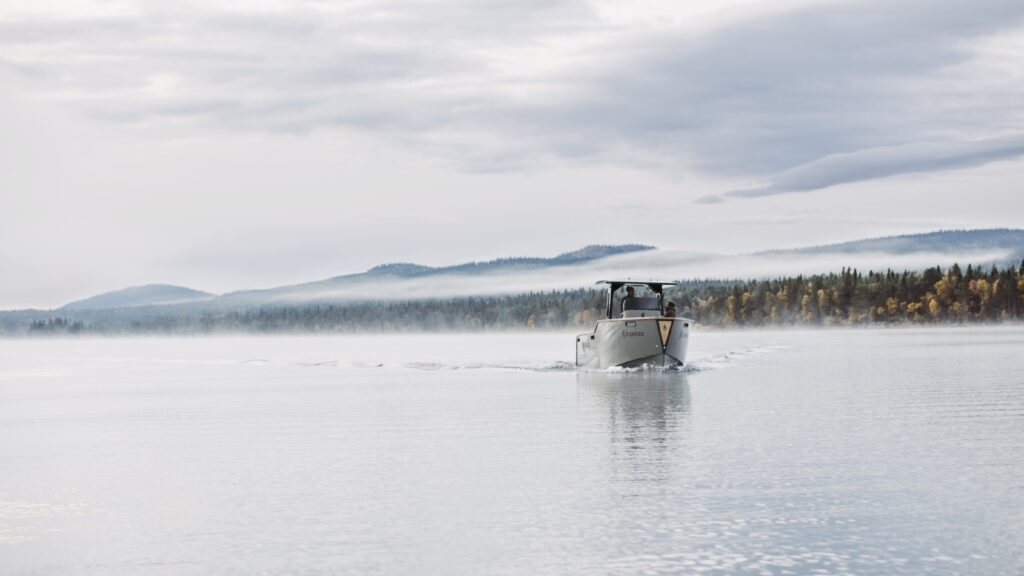
“For us it was important to accelerate quickly, to go fast and to reach far. There was only one battery on the market that was powerful enough to enable the performance we wanted, and that could also be certified for the marine environment.”

René Hansen
CEO
X Shore
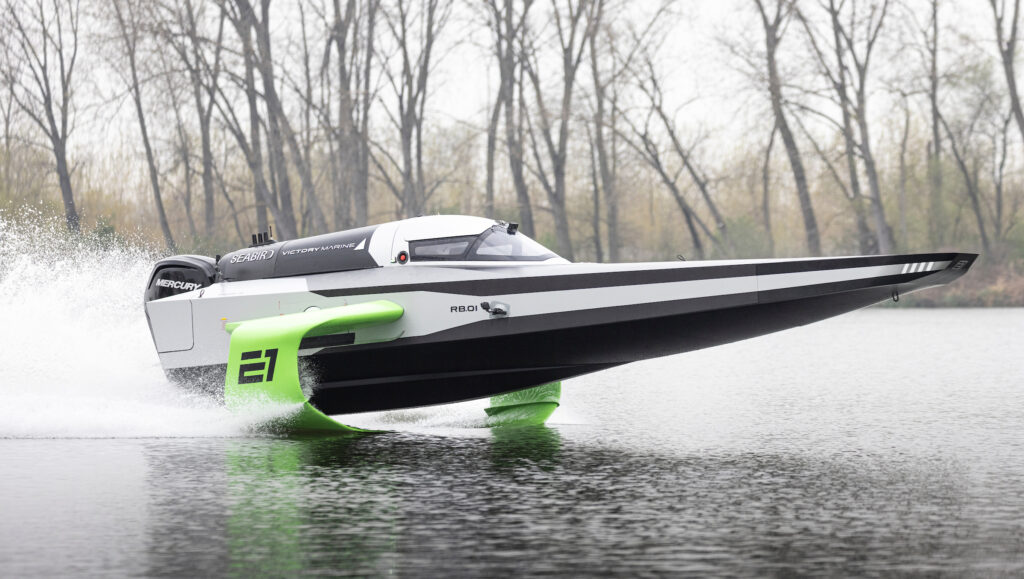
“To equip the world’s first all-electric racing boat, we needed to find a partner that could meet the highest standards of safety and immediate power and performance to create the next generation of electric motorsport. That’s why we teamed up with KREISEL Electric to develop one of the most powerful and efficient batteries, the E1 battery system.”

Alejandro Agag
Co-Founder & Chairman
E1 Series

BATTERY SYSTEMS FAQs

What does KREISEL Electric do?

KREISEL Electric develops and manufactures high-performance lithium-ion battery systems for demanding mobile and stationary applications. KREISEL high-voltage battery systems are used in commercial vehicles, municipal vehicles, off-highway machinery, construction equipment, agricultural vehicles, marine vessels, and battery-buffered charging applications.

What applications are KREISEL Electric batteries best suited for?

KREISEL Electric batteries are engineered for applications where high power output, long operating time, robust safety systems, high energy density, and reliable thermal management are critical. Typical use cases include:

  • Municipal vehicles
  • Agricultural machinery
  • Construction equipment
  • Special-purpose vehicles
  • Off-highway applications
  • Marine applications
  • Passenger ferries
  • Workboats
  • Pleasure craft and recreational boats
What makes KREISEL Electric batteries different from standard battery systems?

KREISEL Electric battery systems are designed to deliver:

  • High energy density
  • High power density
  • Patented immersion cooling and efficient thermal management
  • Robust multi-layer battery safety concepts
  • Certified quality for demanding industrial and marine applications
  • Flexible OEM integration options
  • Scalable high-voltage battery architectures for 400 V and 800 V applications

This makes KREISEL batteries especially suitable for demanding industrial, off-highway, commercial vehicle, and marine electrification projects.

What cell technology does KREISEL Electric use?

KREISEL Electric uses advanced lithium-ion cell technology, currently based on NMC 21700 cells, to achieve high energy density, strong performance, and reliable operation in industrial battery systems.

The cell chemistry is selected based on power requirements, lifetime targets, safety standards, duty cycle, packaging constraints, and the specific use case of the OEM application.

What voltage levels can KREISEL Electric battery systems provide?

KREISEL Electric battery systems are engineered for high-voltage applications and can be configured for different voltage ranges depending on the vehicle, machine, or vessel architecture. Typical system configurations support 400 V battery platforms and scalable 800 V battery applications.

This makes the systems suitable for modern electric drivetrains, heavy-duty power systems, marine propulsion, off-highway machinery, and high-performance commercial vehicle electrification.

What battery capacities are available?

Battery capacity can be engineered according to the specific application, vehicle platform, operating profile, available packaging space, and required runtime.

With modular high-voltage battery concepts, different energy capacities can be configured for OEM electrification projects, off-highway machinery, commercial vehicles, and marine battery systems.

Are KREISEL batteries scalable?

Yes.

The modular battery architecture allows KREISEL systems to be adapted to different vehicle sizes, power requirements, voltage levels, and operating profiles.

Both individual battery packs and larger scalable energy storage systems can be implemented for OEM vehicle electrification, industrial machinery, marine vessels, and stationary applications.

How high is the energy density of KREISEL batteries?

KREISEL Electric develops battery systems with high energy density to enable maximum range, long operating times, and efficient use of limited installation space.

The achievable energy density depends on the application, battery configuration, system voltage, safety requirements, cooling concept, and OEM integration strategy.

How safe are KREISEL Electric batteries?

Safety is a central priority in the development of every KREISEL Electric battery system.

The battery systems include:

  • Multi-level safety mechanisms
  • Battery Management Systems (BMS)
  • Temperature monitoring
  • Cell monitoring
  • High-voltage safety concepts
  • Mechanical protection for demanding applications
Do KREISEL batteries include a Battery Management System (BMS)?

Yes.

Every KREISEL battery system is monitored by an intelligent Battery Management System. KREISEL Dynamic Performance Management combines in-house software expertise with proven KREISEL immersion cooling to support safe, reliable, and efficient battery operation.

The BMS monitors and controls:

  • Voltage
  • Current
  • Temperature
  • State of charge
  • Cell balancing
  • Fault conditions and diagnostic events
Are KREISEL batteries suitable for extreme operating conditions?

Yes.

The systems are engineered for demanding duty cycles and, depending on the application, can be used under challenging environmental conditions in off-highway, marine, industrial, and commercial vehicle environments.

These conditions may include:

  • Heat
  • Cold
  • Dust
  • Vibration
  • Shock loads
  • Heavy-duty operating profiles
How is thermal runaway risk reduced?

KREISEL Electric uses a preventive, comprehensive battery safety concept focused on early detection, active thermal management, and intelligent system control.

  • Early detection of critical conditions
  • Active cell-level temperature monitoring
  • Intelligent control through the Battery Management System
  • Mechanical protection measures
  • Thermal propagation mitigation for high-voltage battery safety

The goal is to minimize the risk of thermal runaway and support safe battery operation in demanding mobile and stationary applications.

How long do KREISEL Electric batteries last?

Battery lifetime depends on several factors:

The systems are engineered for long-term, reliable operation in demanding duty cycles, helping OEMs reduce downtime and support predictable battery performance over the full lifecycle.

How fast can KREISEL batteries be charged?

Charging power depends on the specific battery configuration, system voltage, thermal design, charging strategy, and the charging infrastructure used in the application.

KREISEL Electric develops high-voltage battery systems for efficient charging processes, high-power charging capability, short downtimes, and reliable operation in commercial vehicles, off-highway machinery, municipal vehicles, marine applications, and battery-buffered fast charging solutions.

How is the battery cooled?

KREISEL Electric relies on an advanced battery thermal management solution. The patented KREISEL immersion cooling system permanently surrounds the individual battery cells with dielectric cooling fluid. This helps maintain an optimal operating temperature for the cells with very low temperature spread, supports consistent high performance, improves battery safety, and contributes to long battery lifetime in demanding high-voltage applications.

Are KREISEL batteries sustainable?

KREISEL Electric aims to advance the electrification of industrial applications and help reduce emissions across multiple sectors. By supporting electric drivetrains, battery-powered machinery, commercial vehicle electrification, marine electrification, and battery-buffered charging infrastructure, KREISEL battery systems contribute to cleaner, more efficient, and more sustainable mobility and energy solutions.

Can KREISEL batteries be recycled?

Yes.

Lithium-ion batteries can be recycled at the end of their lifecycle. KREISEL Electric considers the requirements of a sustainable circular economy and works with BASF as a sustainability and battery recycling partner. This supports responsible resource management, battery material recovery, and long-term sustainability in industrial electrification projects.

How do batteries contribute to decarbonization?

Electric drivetrains reduce local emissions and enable the use of renewable energy in transportation, industrial machinery, marine applications, and stationary energy systems. As a result, high-performance battery systems play an important role in the decarbonization of many industries, especially where diesel-powered machines, commercial vehicles, and marine vessels are being replaced by electric solutions.

Which battery can withstand high vibration?

In construction equipment, agricultural vehicles, and municipal vehicles, strong vibration and mechanical loads can affect the battery system. KREISEL develops vibration-resistant battery systems specifically for these demanding operating conditions.

Key features:

  • Vibration-resistant battery construction
  • Mechanically robust cell integration
  • Designed for off-highway battery applications
  • High reliability in continuous operation
  • Proven performance under real-world operating conditions
How does thermal management extend battery lifetime?

Thermal management is one of the most important factors for high-voltage battery lifetime. KREISEL uses an active liquid cooling system and patented immersion cooling technology to keep battery cells within an optimal temperature range, reduce cell stress, and support consistent performance in demanding applications.

Benefits of active battery thermal management:

  • Reduced cell aging
  • Higher charging performance
  • Consistently high power output
  • Improved battery safety
  • Longer battery lifetime and lower total cost of ownership

This helps reduce total operating costs, increase machine availability, and improve the economics of electrified commercial vehicles, off-highway machines, and marine applications.

Can KREISEL help me integrate the battery?

Yes. Through a network of professional system integrators and long-standing technology partners, KREISEL can provide access to experienced specialists who support existing and new customers with component selection, system design, battery integration, high-voltage architecture, cooling concept development, and electrification projects in off-highway and marine applications.

What does DNV certification mean for KREISEL Electric batteries?

DNV certification confirms that a battery system has been tested according to demanding requirements for marine applications. For KREISEL batteries, the certification covers aspects such as safety, performance, and environmental suitability. This is especially relevant for marine OEMs because certified battery systems support technical review, risk reduction, project approval, vessel electrification, and shipbuilding integration.

Which KREISEL battery is DNV-certified?

KREISEL offers a DNV-certified high-voltage battery system for marine applications. The system is designed for demanding marine, transport, and off-highway applications and combines robust construction, high safety, compact integration, scalable energy capacity, and reliable thermal management.

Which interfaces are relevant when integrating KREISEL battery systems?

When integrating KREISEL battery systems, electrical, mechanical, thermal, and communication interfaces are typically relevant. These include the high-voltage connection, low-voltage power supply, cooling circuit, Battery Management System, communication interfaces, safety logic, charging connection, and vehicle or vessel control system.

Can KREISEL battery systems be scaled modularly?

Yes. KREISEL describes its marine battery systems as modular and scalable. The products support use in different marine and industrial applications with high-voltage battery systems scalable up to 800 V, making them suitable for electric boats, commercial vessels, workboats, ferries, and demanding marine OEM electrification projects.

Contact our battery experts.

Reach out to one of our specialists for a non-binding offer. Your contact person will be in touch shortly to discuss your requirements.
Area of interest *