Marine Batteries

High Gravimetric Energy Density For Electric Boats

Contact us

Marine battery systems designed for highest requirements

As the electrification of cars and commercial traffic is the new standard, we now must take the next steps towards sustainable marine solutions. KREISEL Electric‘s goal is to contribute and stop ocean pollution through the electrification of maritime solutions. Together with our partners, we strive for a future with clean oceans!

High gravimetric energy density
High safety standards – DNV certified
Safety features minimize thermal propagation
Great lifetime

Pleasure craft boats

High safety & performance

KREISEL’s numerous successful projects and vast experience in the electric marine sector ensure that we can find a solution for any of your projects. The patented KREISEL cell immersion cooling technology goes for optimum thermal performance with the highest volumetric and gravimetric energy density achievable in compliance with our advanced safety parameters.

Commercial vessels

Highest availability

KREISEL marine battery systems stand for great lifetime, and mitigated downtime and derating, regardless of the given ambient temperature. Therefore, going for highest availability for permanent operation cycles. Intensively tested safety features and the DNV certification corroborate compliance with the highest safety standards.

Electric Ferries

High Energy Density. DNV-Certified Safety.

For the electrification of passenger ferries, passenger boats, and commercial vessels, KREISEL Electric offers high-performance marine battery systems featuring high gravimetric energy density and DNV-certified safety. The compact marine batteries go for extended range, high energy efficiency, and maximum payload while minimizing weight. Designed for demanding, fully electric marine applications, KREISEL battery systems enable reliable, safe, and sustainable marine electrification for ferries and electric boats.

MARINE BATTERY SYSTEMS

KREISEL Electric battery systems are designed to meet high safety, lifetime, and performance requirements. The modularity and scalability of KREISEL products facilitate a wide range of applications of up to 800 V.

KREISEL BATTERY SYSTEMS IN ACTION

“Already in 2018 when Evoy was founded, KREISEL stood out from the crowd with their unique immersion cooled battery. Combined with battery safety that is second to none, KREISEL continues to be the go-to-partner for Evoy, especially with their DNV certification. We look forward to strengthening our partnership in the years to come and working towards our joint mission of cutting emissions on a big scale.”

Leif A. Stavøstrand
Co-founder & CEO
Evoy

“For us it was important to accelerate quickly, to go fast and to reach far. There was only one battery on the market that was powerful enough to enable the performance we wanted, and that could also be certified for the marine environment.”

René Hansen
CEO
X Shore

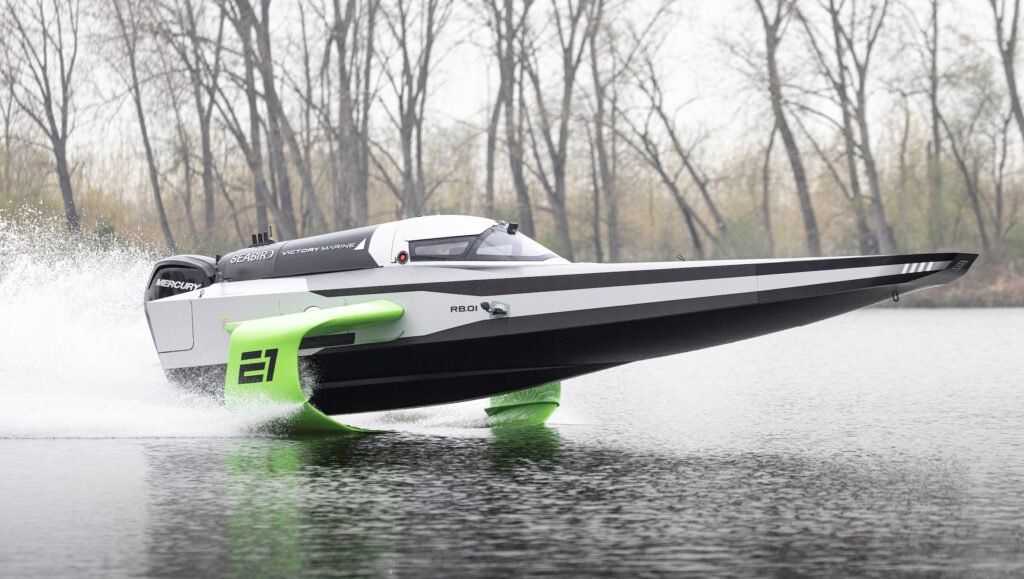
“To equip the world’s first all-electric racing boat, we needed a partner that could meet the highest standards of safety and immediate power and performance to create the next generation of electric motorsport. So we teamed up with KREISEL to develop one of the most powerful and efficient batteries, the E1 battery system.”

Alejandro Agag
Co-Founder & Chairman
E1 Series

“Working with KREISEL Electric battery technology has enabled us to optimize the overall energy supply and ensuring safety and performance in our innovative P-12 hydro foil ferry.”

Gustav Hasselskog
CEO
Candela

MARINE FAQs

Are KREISEL batteries suitable for marine applications?

Yes.

Thanks to DNV certification and proven high-voltage battery technology, KREISEL marine battery systems provide a reliable energy supply for recreational boats, passenger ferries, commercial vessels, and workboats. The systems are designed for demanding marine electrification projects where safety, compact integration, long service life, thermal management, and high availability are key requirements.

Do KREISEL batteries have DNV certification for marine applications?

Yes.

KREISEL batteries were among the first battery systems to successfully complete demanding DNV safety and performance requirements for marine applications. This makes KREISEL a strong partner for DNV-certified marine battery systems, commercial marine electrification, electric boats, ferries, and workboats.

Why is DNV certification important for marine OEMs?

For marine OEMs, DNV certification is important because it builds confidence in the safety, quality, performance, and suitability of a battery system for maritime applications. It can simplify technical coordination with classification societies, shipyards, system integrators, and end customers while reducing uncertainty in project planning, vessel electrification, and marine battery integration.

Are KREISEL batteries also certified for 800 V marine applications?

Yes. The DNV certification also supports 800 V marine applications and large battery system scaling, including configurations where multiple battery packs are connected in series and parallel for higher voltage, capacity, and power requirements.

Does KREISEL Electric support marine OEMs with system integration?

Yes. KREISEL Electric supports OEMs and system integrators with the selection, design, and integration of high-voltage battery systems into marine applications. This includes energy demand analysis, voltage level, installation space, cooling strategy, pumps, battery safety concept, communication interfaces, operating profile, charging infrastructure, and scaling of the complete marine battery system.

Which questions should marine OEMs clarify before battery integration?

Before integrating an electric battery system, marine OEMs should clarify the following points:

  • What range or operating time is required?
  • What is the vessel’s load profile?
  • What maximum and continuous power are required?
  • Which voltage level is planned?
  • How much installation space is available?
  • Which cooling strategy is possible?
  • Which charging infrastructure will be used?
  • Which classification or certification requirements apply?
  • Which redundancy and safety concepts are required?

These questions help design a battery system that is technically suitable, commercially viable, safe, and optimized for the specific marine electrification project.

Which battery is suitable for electric boats and ships?

High-voltage battery systems with high energy density, proven safety, efficient thermal management, and marine-ready certification are suitable for electric boats and ships. KREISEL Electric offers marine battery systems for recreational boats, commercial vessels, ferries, workboats, and high-performance maritime applications where compact integration, reliable power delivery, and long service life are critical.

What are the benefits of KREISEL batteries for marine OEMs?

KREISEL batteries offer marine OEMs advantages in energy density, battery safety, service life, thermal management, compact packaging, and scalable system design. For electric boats, commercial vessels, passenger ferries, and high-performance marine applications, compact and powerful battery systems are essential because installation space, weight, operating time, charging strategy, redundancy, and safety are central design factors.

Are KREISEL batteries suitable for commercial vessels?

Yes. KREISEL positions its marine battery systems for commercial vessels with a focus on high availability, long service life, reduced downtime, and reliable performance. The systems are designed to support high operational availability across different ambient temperature ranges and demanding maritime duty cycles.

Are KREISEL batteries suitable for recreational boats?

Yes. KREISEL Electric lists recreational boats as an application area for marine electrification. For recreational boats, key requirements include high safety, strong performance, operating range, compact system integration, efficient charging, low noise, low local emissions, and reliable battery thermal management.

What role does thermal management play in marine batteries?

Thermal management is critical for marine batteries because it influences performance, battery lifetime, safety, charging capability, and operational availability. KREISEL uses patented immersion cooling in its battery systems to support high volumetric and gravimetric energy density, improve temperature uniformity, enhance thermal performance, and contribute to safe high-voltage battery operation in marine applications.

What does “no thermal propagation” mean for marine batteries?

“No thermal propagation” means that a safety-critical event at cell or module level is intended not to spread uncontrolled to other areas of the battery system. For marine OEMs, this is a central battery safety requirement because battery systems on vessels must meet demanding expectations for passenger safety, system safety, operational safety, classification compliance, and risk mitigation. KREISEL develops its marine battery systems to help minimize thermal propagation risk as part of a comprehensive high-voltage battery safety concept.

Which voltage levels are relevant for marine OEM projects?

Marine OEM projects may require different voltage levels depending on power class, vessel type, propulsion architecture, and application. KREISEL offers marine battery systems for high-voltage applications and scalable configurations up to 800 V. The suitable voltage level depends on the electric drivetrain, power electronics, onboard charger, charging infrastructure, safety concept, redundancy requirements, and classification requirements.

How do marine OEMs select the right battery capacity?

Marine OEMs select the right battery capacity based on the vessel’s operating profile, required range, energy demand, peak power, continuous power, safety reserves, charging windows, ambient temperatures, available installation space, and weight limits. For technical battery sizing, energy demand in kWh, peak load, continuous load, charging power, redundancy concept, thermal management strategy, and safety requirements should be evaluated together.

What are the benefits of a standardized battery system for marine OEMs?

A standardized marine battery system can reduce development time, lower technical risk, accelerate industrialization, and simplify project planning for marine OEMs. KREISEL references standardized batteries, experience from prototype and series production projects, and support from early development through testing, validation, certification preparation, and scalable system integration.

Hans Gradnitzer, Expert Marine Battery

Reach out to one of our marine battery specialists for a non-binding offer. Your contact person will be in touch shortly to discuss your requirements.
Area of interest *